




Canadian MP Don Davies on Canam News with Richa Gautam | Discussion on M-128 | Caste Based Motion
Canadian MP Don Davies engages in an enlightening discussion with Richa Gautam on Canam News about the M-128 caste-based motion. They delve into the intricacies of caste discrimination, its impact on Canadian society, and the need for legislative change. Davies clarifies misconceptions and emphasizes the motion's aim to protect all communities from discrimination. This dialogue highlights the importance of inclusivity and equal rights in Canada's multicultural framework.

Speakers:-
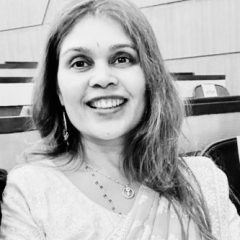
- Richa Gautam (RG) – Founder CasteFiles
- Don Davies (DD) – Honorable Member of Parliament, Canada
Conversation:
RG: So Don, we'll go in right away because I think we've been receiving so many calls from our viewers about this new motion 128. So thank you for taking the time, because I think it will be very valuable to know why you introduced this motion. And what do you plan to accomplish with it? Because I think the current law in Canada covers caste discrimination already, isn't it?
DD: Well, no, actually it doesn't and that's why I think the motion is so important. So in Canada, we have provincial human rights legislation and federal human rights legislation, and essentially they all follow the same pattern. They say that nobody can be discriminated against on the basis of it. And then it lists a number of specific grounds. So there are things like Color, Religion, Age, Sexual orientation, Creed, etc. But not a single statute in Canada includes specifically Castes.
So now there have been a couple of successful applications and there's one in British Columbia. I was joined by Manoj Bangu, who was the first person in British Columbia to successfully file a complaint at the BC Human Rights Tribunal. But what it took four years and the reason it took four years is because they couldn't specifically find caste in the law, so they had to kind of make convoluted arguments by looking at nationality, religion, place of origin, etc to cobble together a conclusion that his complaint was upheld. But it would have been a lot clearer if caste was specifically mentioned and that's what my motion calls for.
RG: But I want to ask you, like you know, if you look at other communities, because this is what happens with caste is that it immediately targets South Asians, right? And if you say denominations who are discriminating or you have sect like this Muslim sects like Shia and Sunni discriminating against each other. Ahmed Riyaas has personally seen and complained that they are being discriminated against by Sunnis.
So will you then make laws for them separately, like sect, denominations, and castes, and how much can we add because caste is covered in their ancestry, I’m sure they must be covered under some aspect of Canadian law right now.
DD: Well, I wouldn't agree with the characterization that this is targeted at anybody. I would reverse it with the way I view it. What we want to do is have a full expression in our Human Rights Code of Protection.
Now, I haven't met a single person who argues that Caste discrimination is a good thing. Nobody will argue that, so I don't understand what the argument is if we add an explicit ground that makes it clear to everybody that you cannot discriminate against someone on the basis of caste. I don't understand why anybody would have a problem with that.
Now the other thing is that Caste is of course it's a bit of a unique feature. It's a little bit of ancestry, but it's more than that. It can be where you were. It can be where specifically you're born, or what our parents do for a living. How dark is your skin, what was the job history of your ancestors? So it's a very unique form that I don't think the current grounds that exist in human rights legislation accurately cover.
What I would say as well is human rights legislation is a living, breathing document. It's an organic document that changes over time. For instance, sexual orientation was not covered by human rights legislation 30 years ago. It was unheard of. But society changed and at the same it followed the same jurisdiction jurisprudential path as caste, by the way, is that you had certain human rights adjudicators who read into the legislation that surely it must be covered, even though it wasn't specifically mentioned. Well, now lawmakers have specifically mentioned to make it clear to society. That is a covered ground and I think caste is the same thing and this is not against anybody. This is for people. It is for those people who do suffer from caste discrimination and you know, we know it exists millions of people around the world still experience this and they experienced it in Canada. I've heard first-hand stories from people, here in Vancouver about it. So I think this kind of protection is important for governments to say exist for everybody. Right!
RG: I have one very important question, I think. What is important for law? It is to be neutral, right? It has to be facially neutral. It has to be able to say that there cannot be separate laws for a particular community, because if you have an immigrant community coming from Africa, they have their own issues. Then of course, as I said, the Ahmad Riyaas continuously face discrimination, whether it's in Canada or in their home countries from other Muslim sects. So how long can we go on applying new sorts of or including new sorts of discriminatory sections in categories?
DD: Well, again, I reject the premise of that question. This is not a specifically targeted issue at anybody you know, I know CASTISM from.
RG: Yeah, if I may just rephrase it. I'm sorry. So, I understand that I don't want to understand. It's almost like a repetitive question.
But if I may go to Burnaby, I think Sa Dhaliwal called out a Hindu specifically because what happens here is that immediately it becomes a concept which is known as Hinduphobia, where there is a targeting of Hindus when the caste word comes along. What do you have to say about that? Immediately there is Burnaby is facing and I have personally heard from people in Burnaby that they have faced bullying. They have faced problems after that whole incident of the passing of the Burnaby motion. So what do you have to do there?
DD: Well, I'm not familiar with that situation, and I certainly have never used the word Hindu. In this, by the way, the people who have reported caste discrimination to me have been people that have the Sikh faith, not Hindus. So Castism does not just exist in the Hindu faith, it exists in the Sikh faith and others as well.
Look, when you have specific grounds in human rights legislation, it's not like they all apply to everybody. I mean, we cover, as I just said, the example of discrimination based on sexual orientation. Well, we're not singling out heterosexuals. This is not an anti-heterosexual move because we're protecting people who are homosexual.
Human rights legislation by definition protects minority rights. And, what I would do as well I think it's really important to reassure anybody of any faith whether Hindu or Sikh. This is not a sword. This is a shield. This is not meant to embarrass or justify an attack on anybody. It's meant to elevate and support victims of caste discrimination. That's what we're trying to target here.
And I don't think anybody, any fair-minded person of any faith who's reasonable would object to saying let's have a strong expression in Canada where multicultural country with people we want to make sure that people are equal and that discrimination on any ground that people can't control is wrong and that should elevate us. That shouldn't be seen as an attack on anybody. It should be seen, I think, as an elevation of the rights of everyone.
And so, I think that when we make everybody more equal. We make our entire society stronger and everybody's rights are elevated when we make sure that minority rights are protected. So that's my point of view on this as well. And, I want to reassure people that this is not targeted at anybody. It's intended to protect people, not attack.
RG: Well, I totally agree with your intentions. And, I do believe that you are always looking out for people. But one of the things is caste is a foreign terminology in that sense. It's a very South Asian issue. And if I may say so, I think Manoj Bongu is a Hindu, right?
DD: No, he's a Sikh.
RG: So, this has been a Sikh versus a Sikh issue. Am I right? Yes, it is the same process. In fact, if you talk to Sikhs, they always say that we don't have any caste because that is why we have moved out of Hinduism.
So this is typical even though Sikhs have always been part of the Hindu faith. But they have always maintained that there is no caste in their faith, right? So they have always used caste as a slur against Hindus, in fact.
Many of these Khalistani separatists who are spreading a lot of hate against India in Canada, and also against Hindus. There are a lot of Hindus who are feeling alienated and how would you protect their rights? Would you pass a motion on saying Hindu phobia, for example, with the number of hate crimes rising in Canada against Hindus?
DD: Well, you see the thing is that we're experiencing, I think an even more pressing example would be the rise in anti-Semitism and Islamophobia, for instance, that we're seeing right now. The thing is, though, about discrimination or racism on the basis of Hinduism, or Islam, or Judaism, or nationality is that it's already covered by religion very squarely. So I would say that that's already protected.
Now, what I would say is when we start pulling a thread on a sweater and start getting involved in politics like Khalistan and anti-Semitism, I think we're getting very far afield. This is not what my motion is about.
My motion is putting a targeted surgical limited expansion of the grounds and there's already, I don't know how many there are, there might be 9 or 10 grounds already expressed in human rights legislation to widen it a little bit to capture another aspect of discrimination.
By the way, Manoj Bangu is Sikh. I'm not sure who the person who attacked him was. I don't know if that person was Sikh or Hindu. I don't know. But I know that he is a Sikh.
But what I want to say is I've heard stories that show that Caste Consciousness is very much alive in Canadian society. I've had people tell me their children come from school and ask their parents. Mom, Dad, what caste are we? We know that it still exists in a very social way when it comes time for marriage; we know that in terms of renting places, people will ask very subtle questions sometimes.
And, we want to make sure that everybody is treated as an individual and they're treated equally and they're that, I would say the same thing for someone of the Hindu faith as someone of the Sikh faith. Castism is unique I agree with you. It's a unique and kind of focused form of discrimination. My understanding is that it's illegal in India. It is my experience. I don't know if you have any information to contradict me, but if it's banned in India legally, if the law prohibits caste discrimination in India, what would be the objection to anybody who has Indian origins to having that same protection according to people in Canada, because we are a multicultural country and as you know, we have millions of Canadians of South Asian origins.
So, I think sending a strong message that looks like we want everybody to feel safe and respected in our community. We want people to be evaluated on their individual characteristics. We don't want any discrimination based on characteristics that people have no control over, whether it's your gender, whether it's the religion that you choose, whether it's your place of origin or your color.
And, I'm actually a little bit surprised at some of the fear and negative reaction to this motion, because that was never my intent and what I want to do is reassure, particularly, I think people of the Hindu faith that they should have nothing to fear from this and their rights have to be as strongly protected as anybody else is. But we have to send a clear message that discriminating against people on the basis of caste is as wrong in Canada as it is in India.
RG: So I can tell you one important question that you just asked. When students come to their parents to ask what caste are we? It's because they are not taught at home. There is a diluted caste identity. First of all, like the identity people may have is not the same as caste discrimination. You can have a strong Indo-Canadian identity; you can have a strong Muslim identity, or Hindu identity. That is not a discriminatory aspect of identity.
What happens is if you discriminate using that identity that is the problem. With Hindus, what is happening is that in “Caste” has been the “C” word. Just like the “N” word is for “Negroes”, because Negroes or whatever, you know, that same word is not used in modern civilized society, because it was a colonial hangover and it was a slur.
Similarly, Caste has been a colonial hangover in India. It is part of the Constitution because the Constitution was drafted during the colonial times and hence there is a desire among Indians and Indo-Canadians to move away from that “Caste” word. And, as you know, the Sikhs, or Muslims, or other sects in South Asia religions use caste as a slur against Hindus. That is the reason that Hindus are always fearful that this same slur and training and workshops will come to Canada.
So what do you have to say that this is a recolonization of Indo-Canadians?
DD: I well, thank you for that historical context. It's true that I think many countries, including Canada are still dealing with the visages of colonialism. And so, I think it's a really important contribution to the conversation.
You know, it's funny that one of the factors in Mr. Bongu's case when he was at the function at which he was attacked was he was actually called a name I forget the name in it was in Punjabi, That was the equivalent of the “N” word. But it was the caste slur. That was the equivalent of that. He was the victim of that. It's an interesting aspect. I think of this issue that you raised.
In some ways, we have to be aware that the caste issue can be reversed and it's my objective here is that no City should be discriminated against the basis of caste, so if in some way there's a perverse reversal of it, if somehow Hindus, because they are associated with being the oppressors of the caste system, are now sometimes having that used against them in an unjust, unfair way to attack them when they've done nothing wrong. I think that's wrong as well.
It’s interesting, I suppose if my motion is successful and Caste is added it would be open to a person of Hindu origin or faith to file a complaint if they feel that caste is being used in a discriminatory way against them. But I think you make an extremely important point which is we're not talking about prohibiting identity. We are talking about acts of discrimination.
What my motion says is to amend the Canada Human Rights Act to make discrimination on the basis of caste illegal. So it's not how you identify, it's what you do about it, and although I would say that Interestingly, you know if we have a stratified society where people are identifying themselves in a hierarchical way, looking down on others because of the history of their grandparents or where they're born, or what their historic occupation was, I find that personally socially odious. I would find that contemptible, so I'm not going to defend that. I don't think that's a good thing in society. But I agree with you that what the law will do is prohibit acting on it. And that's where I think we're getting at. You know this is saying that you know it's not against the law to think something against the law to do something about it, and we have freedom of speech, freedom of expression. That's a great thing in our Country.
So I'm not trying to socially control how people identify or what they say or think, but I do think that making sure people have basic protections against being discriminated against on that basis in a tangible way.
I mean, Mr. Bongu was slurred in public and was physically attacked. At the same time, on the basis that was, I mean it wasn't my decision, it was an adjudicator that awarded him $9000 after hearing and all the defenses that that you have sort of touched on were raised in that case and it was still found that this was an attack because of his perceived caste. And I don't think anybody of any good faith. I would think that that's a bad thing.
My concern is that if we don't amend the law as well, that decision could have easily gone the other way. You could have had another adjudicator on the same facts who looked at the code and said, look, I don't see caste there.
So, although I sympathize with the situation, I can't. I'm not prepared to make the indirect argument that was made in this case, and that's why I think clarifying the law. If human rights adjudicators are already finding that this is covered and you started off your question by saying, isn't this already covered in Canada? If it's already covered in Canada, what's the objection to specifically and explicitly mentioning it? I don't see any problem other than clarifying the law.
RG: I would say that if you look at what happened in Burnaby. And what happened in Toronto is that Hindu groups were targeted directly during those two motions, whether it was in the Toronto School District or in Burnaby. At that time, Hindu Canadians had not done anything either in Burnaby or in the Toronto School District. And so, as you can see, the entire community was slurred against. And maybe it is time for the Canadians to actually act upon and say that this is wrong, that we were targeted during the Burnaby motion. What do you think of that? And do you actually condemn the kind of language used by Sa Dhaliwal during the recorded comments?
DD: Yeah, I'm not. I haven't heard his language. I will. I cannot comment on something I haven't heard.
RG: Well, I can tell you what he said. He said that Hindus, wherever they go, they bring past and they are castism by nature, something like that I mean, I don't know exactly.
DD: I believe what you told me. But I mean I would want to talk to Mr. Dhaliwal while I'd want to see the whole context of what he said. But I think I've covered this already. This is not a sword, it's a shield. In no way do I want anybody to feel uncomfortable about this.
I would like to say, I haven't even used the word Hindu. I've done 10 interviews and a news conference and spoke on this. I've never even used the word. Frankly, I wasn't even aware of the sensitivity in the Hindu community. Because the case, that I did in my news conference was with someone from the Sikh faith.
So I’m aware that caste generally has been from the South Asian community, although not necessarily in India now. I've heard from some of my Fijian constituents that just now, mind you, many of them are of Indian ethnic origin. So and I think there are a few other countries where caste has been spread. But I want to be clear; this is not an anti-Hindu Motion in any way at all. This is a pro-human rights motion.
And by the way, there are Hindus, people of the Hindu faith that would, I guess be considered to be of lower castes, that this will protect. So this is not a slur. This protects Hindus as well as anybody else. I mean my understanding is in the five castes that there are millions of the Dalit castes that are Hindu. Are there? Alright!
RG: I want to say that caste in itself is a Portuguese term that was used by the British. It was called Casta and the Portuguese, so caste is not Hindu in any which way. Also, Dalit was a word that was invented during the British colonial times. There is no word Dalit or Caste in Hindu scriptures and these sorts of things are not sanctioned in Hindu society or Hindu religion or Indian society. It is like a colonial hangover which is applied to any intelligent South Asian who would actually act concerned because it is like a recolonization of our society. Caste was brought by colonizers whether in Fiji, whether in India. Caste was never our world. That is why when we come to Canada, we are concerned that our human rights are impacted and we may be recolonized. So that is the whole concern and I hope you will address these concerns, Sir, because I'm really-really amazed with the great conversation that we had and heard from you.
An important question to ask you because I know you have three important motions other than this motion 128 which are also a very key issues, whether it's global warming, vaping, or affordable housing, I wanted to see how you would rank these. I know we all have limited time on, when it comes to the reading. So I wanted to see, how you would rank these in your terms of importance to you.
DD: Well, that's a great question. You know, they're all important. You know, I don't know how we can and I'm not sure how helpful it is to try to put issues that are important to people in the hierarchy.
What I would say to you though as well is. And thank you so much for the historical function or information you're giving me. What I would say though is sometimes I think we need to, we need to understand the history, but we also have to focus on the present, that what I do know is that discrimination on the basis of caste, whatever the origin, whether it's a colonial concept that was foisted or not and I certainly believe you when you say that it's a reality today. That's what I'm dealing with.
I hear a lot about it happens a lot. For instance, in the Israel Palestine debate, for instance. Because we can get, we can go down the historical record at infinitum and I'm not sure how helpful that is at the end of the day, we have a live issue today that people are feeling and I think it's our duties as citizens of 2024 to say do we recognize that this exists? If it does, what's our position on it and should we do something about it? And that's again, that's the spirit I brought to this.
This was not in any way at all intended to make anybody uncomfortable, rather to elevate people's feelings of safety and security of all rates. And, you know, human rights are in their fundamental to humanity just like my motion on housing is. I think it's a basic human right if you're not, if you don't have secure lodging. For you and your family, this is what anchors us in our community, makes us able to work and go to school and connect with neighbors.
You know, these are fundamental human rights, and I would rank them all very importantly. But you know where I would conclude is this is that I think what is really positive of this is that we're having a discussion and I think discussions and you know hearing other points of view that put things in context and raised issues for instance of how this is making some people in the Hindu community feel is very important. And I hope that what we get out of this is a dialogue. That fosters greater understanding, greater respect for each other and greater security and protection.
The society is constantly evolving. Canada is an experiment. I think the first country in the world to have official multiculturalism as a policy where a wonderful example to the world where people come from all over the world of all faiths, and creeds, and colors, and religions. And we managed to come together in a peaceful society. But it's a work in progress and I think dialogues like this are really important so that we make sure that that we're advancing respect for each other.
Sometimes those conversations are uncomfortable, and I think this is one conversation that makes some people uncomfortable, but I'm hoping that what come out of this is greater tolerance and understanding and respect for everybody, because that's my intention.
RG: I really appreciate that. I want to ask you once again, as to what you think of the Hinduphobia, there is a rising trend in people feeling concerned about their safety. There was a case of a student Chirag Angel who died, shot dead actually for no apparent reason. Also, a couple of families in closer to Toronto faced fire in the house, things like that.
So there have been many such issues that have showed up, there were two children who were bullied and they have written to us that in Burnaby they are not being homeschooled, they were unable to go to school because of the incessant bullying that they are facing. So what they had to say about the idea of also putting through a Hinduphobia bill, would you support something like that? He's been asked from the community.
DD: Well, what I would say is first of all, I condemn all of that categorical. Nobody should be bullied or slurred or made unsafe or attacked for who they are on any ground. What I would say again is that I would say that if people are being attacked on because they're Hindu, that they're already covered. They're clearly covered by Human Rights Legislation.
RG: There’s an Islamophobia bill and there's an anti-Semitic recognition somehow, Hinduphobia always falls to the side.
DD: There's nobody calling for anti-Semitism or Islamophobia. And frankly, nobody has called on me to add it into Hinduphobia at all. I haven't had any experience or call for that at all. I'm happy to talk with that.
But again, I'd be happy to look into that, but my initial response would be that those are already squarely covered by discrimination on the basis of religion or national origin, because those are major religions. So, the people that are talking about the rising anti-Semitism, Islamophobia are certainly talking about the scourge and the rising incidents. But nobody's suggesting that the law doesn't cover it.
What we're looking for is a greater enforcement. We need more robust consciousness of this. And I think there should be charges and complaints and filed at the appropriate tribunals and commissions. You know, this is society is like riding a wild horse. It's all of our duties too. That's probably not a very good metaphor.
There's a lot of activity going on and it's our duty as citizens in a democracy to raise these issues, and sometimes it requires a change in the law. Sometimes it requires an enforcement of the law; sometimes it requires just people to speak out. You know, we need strong Condemnation and I have no problem adding my voice of strong condemnation to any incident of Hinduphobia that exists anywhere. I'm a strong proponent of equality and human rights and I want everybody to be respected for who they are and I will condemn it wherever I see it in any occurrence. But I'm happy to sort of look into that if a case can be made that we need an amendment to Human Rights Legislation because people feel that Hinduphobia is not covered. I'm happy to look at that, but again, my preliminary thought would be that it already is squarely covered. I'd be very surprised if it wasn't.
But thank you very much. I'm actually about 5 minutes after I'm supposed to leave at 2 o’ Clock. But thank you so much for the thoughtful conversation. And again, I want to leave your viewers and you with a very strong assurance that this is intended to elevate the rights of everybody. And not to attack anyone and I encourage anybody who you know in the Hindu community who is concerned about this to contact their representative, they can contact me and that I'm happy to foster further discussion on this so that everybody feels that their rights are protected.
RG: Thank you, Don. Thank you, Sir. It's been really a pleasure talking to you. And I know that the space will be watched very closely. So, Good luck with everything that you're doing.
DD: Thank you for your time. Really enjoyed the conversation as well.
RG: Yeah, same here. Well, hope to see you again!
DD: You as well. Bye now!